
Blog
-

The Eric Carle Museum Launches #GetBehindPictureBooks
Authors, illustrators, teachers, librarians, and other kid lit devotees have posted photos of themselves with favorite titles. Join the fun and spread the love of picture books! Remember to tag @carlemuseum.
-

Michael Slack to Create the Shorty and Clem Series
Shorty is “a very short dinosaur” while Clem is “a very large quail.” Slack was represented by Lori Nowicki, a literary agent at Painted Words, who “brokered the deal for world …
-

The Importance of Role Models and Being Representative
By Taran Matharu
A year and a half ago, my book, The Novice, went viral on a social reading app called Wattpad, being read over 6.5 million times. I receive dozens of messages from my fans every day. Two questions are asked the most. The first is not unusual: aspiring writers requesting I read and comment on their work. But the other might surprise you. It’s people asking me if I am Indian/Pakistani/Asian.
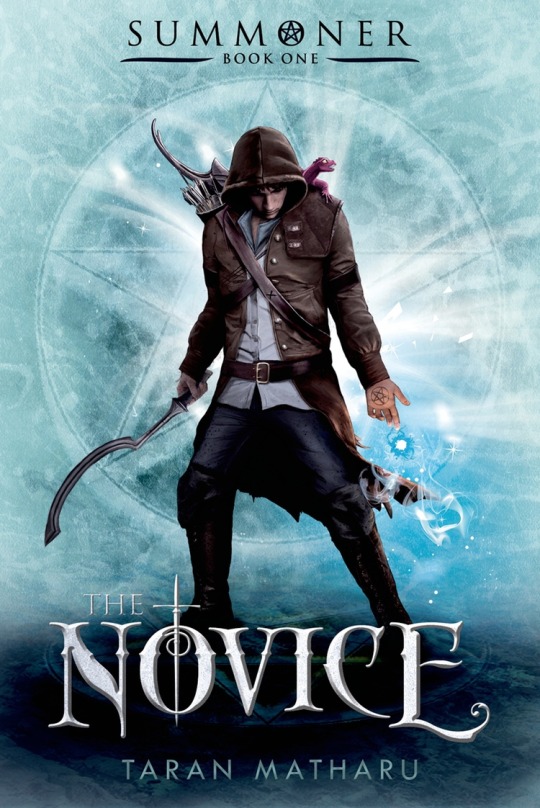
At first I thought it was just curiosity about my profile picture, as I am an unusual mix: half Indian and half Caucasian Brazilian. But there was one thing that all of the askers had in common — they were all young Asians.
They will usually go on to talk about how I have inspired them to write or read more. Others simply empathized with my characters, sometimes mentioning dark-skinned ones such as Seraph in Summoner: The Novice. It seemed to me that they wanted a role model. I wondered why that was, until I realized something.
As I understand it, children will often seek role models that they can empathize with, choosing those that are similar to them. When you ask a young girl to name her role model, she will invariably select a woman. Ask a boy and he’ll often choose a man. It follows that this is true of culture, race, and appearance.
Yet, when you look at publishing, there are fewer ethnic minority authors that are representative of the Western world. More often than not, when I go to author events, I find myself as the only minority in the room. I don’t think this is evidence of biases or racist tendencies in the industry though.
I believe the problem is cyclical. A lack of minority authors to inspire budding writers causes a dearth of them again in the next generation. The problem is made worse by a similar lack of ethnic minorities in children’s books. Even if they do appear, the book is often either set in that character’s country of ethnic origin, or the book is specifically about race and culture.
In the end, lack of diversity in publishing sends an unintentional message to children of minority backgrounds: Reading and writing isn’t for them. Considering how important reading is to a child’s development, this is a real problem.
But why does this happen? It may be a simple emulation of the “greats,” who lived in a far less diverse society. Perhaps authors choose to write characters that are most similar to themselves. But I think there is an element of fear when writing a minority character, which adds to the problem. The writer might ask his or herself:
• Is the character unintentionally being portrayed as a stereotype?
• Is the language used to describe the character’s skin color offensive?
• How does one describe an East Asian person’s eye shape or skin tone?
• Is white the “default” for a character unless you describe their color?
• Is skin tone the best way to identify a character’s race?
• In a fantasy world, is race irrelevant?In an age of snap judgements, Twitter shaming, and author controversies, it can be easy to play it safe and avoid creating diverse characters altogether. I urge authors to be brave. The answers to these questions are not as hard to find as you might think:
• Read diverse books with diverse characters. Most authors learned their trade by reading and studying authors that came before them. This is no different.
• Ask. If you yourself aren’t from a diverse background, you’ll know people who are. If in doubt, see what they think is the best way to go. They won’t have all the answers and opinions will differ, but isn’t that the case with all writing?
• Trust your editor. He or she can help you get on the right track. Don’t be afraid to seek guidance if you’re unsure.As writers, we need to break the cycle. We should celebrate authors who include diverse characters and not demonize them if they don’t do it perfectly.
There’s no easy solution. I don’t think that diverse writers should be given special treatment, or that we should lower the bar for them. Instead, writers like me should take our responsibility as role models seriously; the best people to inspire reading and writing are the authors themselves, be that through mentoring or simple engagement with fans. And maybe by having this conversation, we can encourage writers to be more representative of the world we live in, whatever their genre or background.

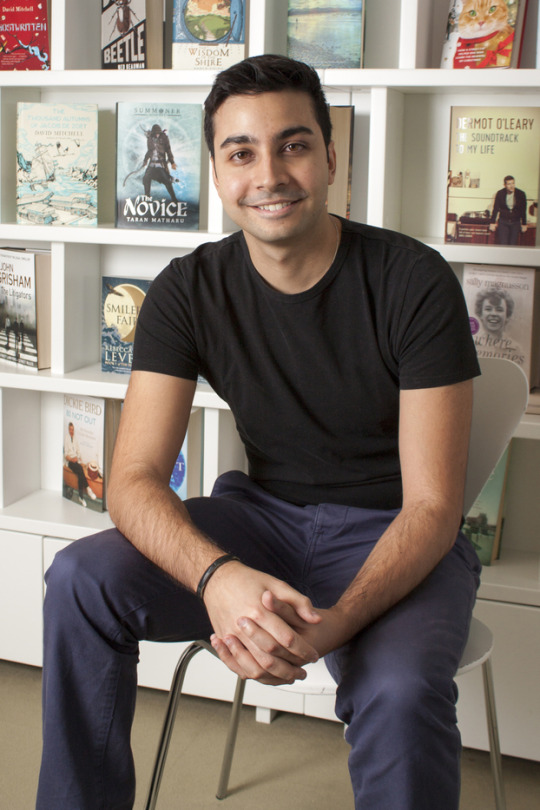
Taran Matharu wrote his first book when he was nine years old. At twenty-two, he began posting The Novice on Wattpad (the online writing website) and reached over three million reads in less than six months. The Novice is the first of three books in the Summoner series, and Taran Matharu’s fiction debut. Taran lives in London.
-

Pew Survey Finds Young Adult Reading Up
80% of young adults reported having read a book (in whole or in part) within the past year, whereas just 72% of adults answered the same. The survey, which was …
-

Upcoming YA Book-to-Film Adaptations
Here’s a look at some of the page-to-screen productions we can look forward to: The Hunger Games: Mockingjay Part 2 – based on the trilogy by Suzanne Collins (Scholastic). Release Date: …
-

Little, Brown Books for Young Readers to Publish Neil Patrick Harris' Debut Middle Grade Series—The Magic Misfits
New York, NY — Megan Tingley, Executive Vice President and Publisher of Little, Brown Books for Young Readers, announced today the acquisition of The Magic Misfits, the debut middle-grade series …
-

Remembering Author Vera B. Williams
Williams’s picture book A Chair for My Mother earned the artist her first Caldecott Honor in 1983. The book was part of her series about a Hispanic girl named Rosa and her family. Readers can …
-

#DrawingDiversity: 'Rain!' by Linda Ashman, illustrated by Christian Robinson
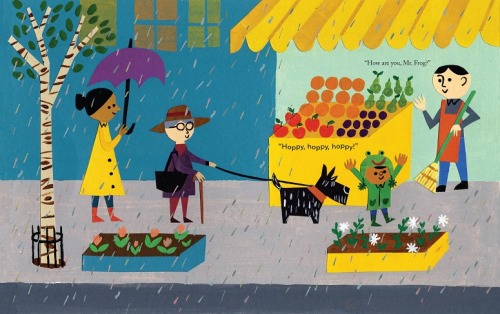
Rain! by Linda Ashman, illustrated by Christian Robinson (@hmhkids/ Houghton Mifflin Harcourt, March 2013). All rights reserved.
-

The 2015 PW Publishing Industry Salary Survey
89% of respondents identified as white/Caucasian, the same as in 2013. The diversity problem has gained visibility, however, with only 21% of respondents feeling that steps have been made in diversifying the industry’s …
-

First Ever Worldwide Author Tour For The November 3, 2015 Release of 'Diary of a Wimpy Kid: Old School'
NEW YORK, NY — Amulet Books, an imprint of ABRAMS, announces today the cities for bestselling author Jeff Kinney’s unprecedented worldwide author tour. Promoting the release of book 10, Diary …
-

Katherine Applegate on Writing for Middle Graders
Applegate began not in children’s books, but in creating pop psychology quizzes for a teen magazine! She eventually transitioned to writing for young readers. Her favorite audience: the middle-grade reader. One of the …
-

Enhanced Editions of Harry Potter Series Now Available Exclusively on iBooks for iPhone, iPad & iPod touch
CUPERTINO, California and LONDON — Apple® announced that enhanced editions of all seven books in J.K. Rowling’s Harry Potter series are now available exclusively on the iBooks Store℠ for readers …
-

#DrawingDiversity: 'The Adventures of Beekle: The Unimaginary Friend' by Dan Santat

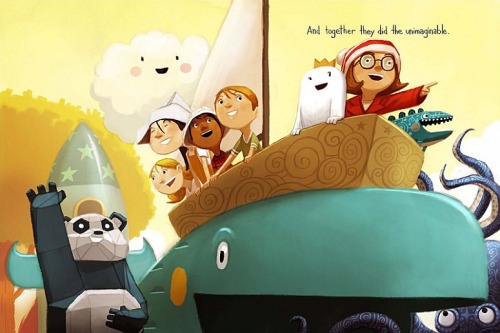
The Adventures of Beekle: The Unimaginary Friend by Dan Santat (Little, Brown Books for Young Readers/Hachette, April 2014). All rights reserved. @littlebrown
-

The Rise in Graphic Novels for Girls
Children’s comics overall are showing tremendous growth, with sales up 35% in the past year. The fact that the kids’ market is growing rapidly, especially for girls, gives a strong runway for …
-

Happy Birthday, Philip Pullman!
Pullman studied at the University of Oxford, where he went on to work as a professor. After penning a few novels for adults, Pullman shifted to writing for younger readers. He …
-

Walden Media to Create a Platypus Police Squad Movie
The children’s series by Jarrett J. Krosoczka centers on two duck-billed detectives in Kalamazoo City tasked with busting illegal candy sales and tracking down political corruption. The books are published …
-

Bloomsbury Children's Books Launches #StoriesForAll
Each day this week, Bloomsbury is featuring testimonials from authors, parents, teachers, librarians, booksellers, and other kid lit lovers. On twitter, instagram, and tumblr, join us with the #StoriesForAll hashtag to share …
-

Kate DiCamillo's 'Edward Tulane' Adapted for the Stage
The play—which stars Jessie Fisher, Melanie Brezill, Kelvin Roston Jr., and Patrick Budde—will premiere at The Ruth Page Center for the Arts on October 23, 2015. DiCamillo was inspired to write …
-

Elissa Tomasetti Named Senior Vice President, Marketing for Scholastic Education
New York, NY – Scholastic (NASDAQ: SCHL), the global children’s publishing, education and media company, today announced the appointment of Elissa Tomasetti as Senior Vice President, Marketing for Scholastic Education. …
-

Cultural Boundaries and the Role of Experts
By Audrey Maynard, Children’s Editor at Tilbury House Books
Confucius is credited with saying, “True wisdom is knowing what you don’t know.” As a white editor who values working on books with authors and illustrators from different regions, religions, and cultures, it’s always been important to acknowledge my limitations. One lesson I’ve learned over time is the value of hiring independent cultural consultants to help spot issues in manuscripts. It is an unfair burden on authors or illustrators to presume that any one person can act as spokesperson for an entire religion, tribe, or ethnic group. Too often those of us from majority culture perspectives look for the “single story” or the single perspective. Unfortunately, as others have observed, this can lead to simplistic representations and stereotypes in books that otherwise might have a lot to offer. Having a third-party cultural expert can facilitate conversations that go beyond the specifics of a manuscript and that can be vital to the success of the book.
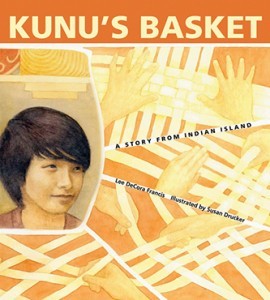
In 2010, I began editing a picture book with Lee Francis, a member of the Penobscot tribe. Her manuscript was a tribute to a special uncle, a man renowned for his basket-making skills. Lee wanted to honor his work and write a contemporary depiction of life on Indian Island. As Lee and I talked about different illustration and design styles for the story, Jan Brett’s images for The Mitten came up. Lee was enthusiastic about its design and layout. Thinking I had Lee’s approval, I conferred with the illustrator Susan Drucker. Although Susan is not Native, she was very committed to the project and to getting as many of the cultural details of the story right as possible. Susan and I discussed the idea of using the sidebars to show kids how to make a basket. We traveled together to the Penobscot Reservation on Indian Island. With Lee as our guide, we took photos of the houses, the trees, and the workshops. For the next five months, Susan researched native basket-making techniques as part of her quest to make a beautifully detailed book.
On a gray November day, Susan and I returned to Indian Island and met with Lee and Theresa Secord, the Director of the Maine Indian Basket Association. Theresa was the perfect cultural consultant for the book. We gathered in the tribal offices and Lee and Theresa carefully looked through Susan’s dummy of Kunu’s Basket. Susan and I eagerly awaited their reaction. We both hoped to see big smiles as payoff for Susan’s hard work. Theresa began the critique by asking Lee some questions about her uncle, and it quickly became clear that there were problems that needed attention. Theresa explained to us that although the drawings were well executed, and although she was appreciative of the efforts being made for cultural accuracy, the sidebar illustrations needed revision. Theresa’s mission is to preserve cultural integrity – and privacy. She explained that crafts people are vulnerable to imitators, and she worried that unscrupulous people might use Susan’s step-by-step illustrations to “rip off” their Native Culture. Lee was clearly in agreement with Theresa’s perspective. Susan and I were astonished and confused. Our original goal – to produce a culturally authentic story – had been met, but in the end, it appeared, a higher value needed to be followed. The story of Kunu’s basket could remain a story about a basket-making apprenticeship, but the details of how a traditional Penobscot Pack basket was built could not be featured in the sidebars or the end notes.
As an illustrator, Susan was dismayed that her research and art would not be used. However, we both understood that the knowledge of basket-making was not ours to share. It was a twist we never could have anticipated, but the request was one that needed to be honored. Kunu’s Basket was published in 2012, and it was selected as part of the Reading Is Fundamental’s 2012/2013 STEAM Multicultural Collection and the Cooperative Children’s Book Center Choices in 2013.


Audrey Maynard has been Children’s Book Editor at Tilbury House for
14 years. Before working as an editor, she taught young children in Oakland, New York City and in rural Maine.
